

Most of this was written before yesterday but yesterday will be no surprise to subscribers…
Sorry for lack of posts. I’ve been in America on the next phase of regime change, very interesting. I’ll post on that by next Friday.
I’ll also post on the Sunak/Fraser Nelson errors on covid. Insiders have picked their side and it’s become entangled with identity. Both Telegraph and Guardian ‘monetise’ their respective nutters by entangling covid arguments with Brexit and party identities. MPs/hacks have formed identity-groups to tweet slogans. So most graduates now find it extremely hard to listen and change their minds. Further, it’s convenient for many players to blame Boris for more than his fair share to hide systemic elements of the failure. But it’s important in principle and for the inquiry to try to stop disinformation spreading so I’ll explain — and outside SW1 there’s a far bigger audience for the complexity, which doesn’t fit with ‘lockdowns good/bad, masks work/don’t, closing borders is obvious/racist’ etc.
Last September-October I advised subscribers:
Ignore No10/HMT/BoE claims ‘inflation is transitory’ and assume incompetence as usual.
Ignore No10 claims that supply chains are fine, expect major disruptions and prepare for them, assume incompetence as usual.
Expect Putin to exploit 20 years of awful NATO/EU policy and European energy policy, and assume incompetent western response as usual.
‘Stablecoins’ will blow up and financial markets crack.
The pundits think it’s extremely unlikely that Boris will be removed in 2022, they’re babbling ‘in power for a decade’, but they’re ~80% likely to be wrong again.
Western institutions have again proved even worse than even the pessimists feared.
Now?
Newspapers and MPs have tried to sell a story that ‘Truss is a serious person, underrated, she’ll surprise people on the upside’ and so on.
Here is the elite insight the Economist gave their Very Serious Global People:

This is Insider delusion. Insiders have to pretend ‘the system’ is not a joke. And if it put a total joker into No10 then it would be… not serious, right? And we’d just be pundits talking drivel about clowns, which would make us … not serious, right? So that’s impossible…
Truss is in a flat spin and won’t recover. The only thing going for her is she doesn’t have to face someone like Obama or Bill Clinton. But Truss is so bad even dud Starmer can win if he avoids Truss-ERG stlye disasters.
I would take further steps this winter to protect from chaos that our institutions can’t cope with and/or generate themselves:
power and gas disruption
knock-on effects to other supply chains (food, medicine etc)
strikes and violence
no timely A&E in your area (unless you have specific info to the contrary) — across Britain this winter, people will be putting loved ones in their car and driving them to A&E in fear and desperation as if they live in a failed state. (This goes back to the fateful refusal of Boris to fire Hancock and begin a huge national effort on the NHS in summer 2020 when he was warned by me and two Cabinet Secretaries that what we see now would happen if he didn’t.)
And this is before we get to the possibilities of nuclear escalation from the disastrous western response to Russia’s invasion.
And before our Very-Online-Very-Remain Hacks and Academics — blaming Brexit for the Remain-campaigning PM (see below) — get another unpleasant surprise that the Eurozone has not solved its fundamental structural problems, is deeply screwed, and will have its own systemic problems in coming months, exacerbated by its Russia/energy idiocy. It’s already suffering the rise of extremists, as Vote Leave predicted in 2016. This will get worse along with economic stagnation, free movement, crime, terrorism.
And if you look at SW1-twitter today, it’s truly on brand that a) it’s turned out UK pension funds were highly leveraged and vulnerable to blowing up, b) No10/11 were clueless about this crucial fact until some of them called the BoE in desperation, c) SW1-twitter is ignoring exactly how this happened! Only trillions at risk in leveraged positions without the Supposedly Serious People having a Scooby-Doo just like 2007-8. It’s … Brexit’s fault!
Onwards to these Serious People dealing with Putin’s announcement tomorrow…
I gave Truss the nickname ‘human handgrenade’ when she worked in the Department for Education. She said this week it was a ‘compliment’ because she gets things done. No. It was because she caused chaos INSTEAD OF getting things done…
Boris is supporting Truss. Why? 1) He thinks it’s the best way to stop Sunak. 2) He knows Truss is mad as a box of snakes and is thinking, ‘there’s a chance she blows, there’s another contest and I can return’.

Over summer I wrote on a few things for subscribers:
How HMT has some great people but can’t avoid vandalising things, especially British science and the R&D ecosystem, and why it must have less power if you’re serious about productivity/growth/R&D etc (NB. LT has increased its power accidentally, see below)
Culture Wars: Strauss & Chinese ‘engineers of the soul’ on Western decadénce
Below some snippets.
I’ll do another AMA after the American blog…
The Human Handgrenade: the natural virus generated by SW1 ecosystem
Truss is the natural culmination of British politics for 25 years — a clown surrounded by clowns focused entirely on the Telegraph/Mail/Sun, clueless about real power, no interest in real problems, blank staring eyes when it comes to management, yet the Tory newspapers and Tory MPs babble about ‘the natural party of government’ and ‘strategy’ pretending it’s like the West Wing instead of Fawlty Towers.
Unlike Boris Johnson, who successfully conned the media and MPs hiding behind mask after mask, she is, like Cameron, a sphinx without a riddle.
She’s laughably rubbish at politics and communication. I know teens better at building and managing teams.
Over the years I’ve written some Golden Rules for politics that are unrecognised simplicities — you’ll never see them in the MSM but when you know them the whole farce of ‘the news’ makes more sense.
One is: the government doesn’t control the government, doesn’t want to, doesn’t understand how to, couldn’t even if it wanted, but this cannot be discussed in polite Westminster society. This rule really helped you understand Cameron, May and Boris. It will help you understand why Truss fails to push through the huge deregulation she says she wants and which the Tory newspapers/pundits claim will happen.
Another is: given they don’t bother taking nuclear weapons seriously, never assume they are or can take anything seriously, or that there is a serious well-incentivised team working on huge problem X that’s leading the news, they’re almost definitely thinking about their next interview not fixing X and some key officials responsible for X probably clock off at 4pm. (People assumed I meant ‘nuclear’ as a metaphor but as 2022 shows I meant it literally.)
Another is: pundits/academics present politics as if politicians a) really care about government and how power truly works and b) are optimising for ‘winning elections’ and ‘communicating with voters’ — no, no — they’re mostly optimising for tomorrow’s media and career advance via in-group factional signaling. Realising this will help you understand a) what Truss really is, b) why the media can’t explain it well.
It’s impossible for the MSM to analyse politics effectively because that involves discussing another Golden Rule, a corollary of the one above: that ‘people serious about power do not steer by the media and do not confuse communication with a press office’. The media’s power rests to a large degree on politicians wrongly thinking that ‘communication equals engaging with the media’. In fact, dealing with the press is a small part of good communication and not the most important. (In America, advertising means people intuitively better understand the distinction between communication and dealing with the media. Underappreciated: Elon Musk closed Tesla’s press office. Underappreciated: in the Department for Education, I forced through shrinking the communication team from ~250 to <50 and everything improved and would have improved further if reduced to 10.)
Truss is the perfect case study, even more so than Boris. Since 2010 she has focused on a) the Telegraph/Mail/Sun; b) in-group signaling to Tory factions to advance her career. That’s it. GPT-3 has more interesting complexity in its utility function! You will see over coming weeks that No10 continues to bend repeatedly to the centre of gravity of those newspapers’ demands, not the centre of gravity in the country — and the natural tendency to do this will be reinforced by the leadership crisis already sinking her team (‘gotta keep the Telegraph on board PM or the natives will get very restless’).
It’s not accidental that this is the person who scrambled through the maze of the rancid Tory Party’s leadership contest and appealed most to those newspapers. They know her. They know she belongs to them, in many ways even more than Boris did.
Boris had a Self-Aware Mode during elections or existential crises for himself. Suddenly his Normal Mode — focus only on the media, ignore what’s actually important, ignore how Whitehall works, chase personal whims without discipline etc — would be suspended. Screw the media, screw MPs, don’t just do whatever dumb thing I blurt out for god’s sake, I’m a journalist, I don’t know what I’m doing, just win! This mode was deleted after the 2019 victory and he was programmed to self-destruct. But at least he had that mode. She does not have Self-Aware-Mode — behind the blank staring eyes, ‘lifeless eyes, like a doll’s eyes’, there’s nothing else.
Her ‘success’ is not some weird outlier as most in SW1 want to pretend, it’s the product naturally generated by the institutions, incentives and culture of the Westminster ecosystem — the ecosystem I described back in 2014, which we wanted to smash up by doing Brexit and which Brexit is changing, albeit not fast enough.
Reflect on what it means that the Tories chose perhaps the only MP more obsessed with the newspapers than him.
And remember: Boris wanted her because he thought she’d fail fast enough that he can squirm back into No10 in 2023. ‘Old foxy’, as he likes to call himself, can be cunning when it comes to his own interests.
Talk of letters has already started. He does not want to take over as Leader of the Opposition in 2024 — a tough, hard job with no grand houses and international jaunts. No, he wants to be motorbiking around Chequers again in the spring as Dylan chases the new lambs, striding around Kiev striking faux-Churchill poses, quoting Homer on hubris and rebirth… (Surely he’ll get her to give him a new safe seat if he wants to stay in the Commons?)
She shot her No10 operation in both feet on Day 1
She made bureaucratic changes to No10/Cabinet Office on the day she took over that are a great illustration of the Golden Rules above — MPs optimise for media, not real power.
They have the following effects, many already obvious:
The power of No10 is much diminished viz making policy, observing what is happening, and making Whitehall do what it wants.
She shoved out many very talented officials from the Policy Unit who really understood their subject and had institutional memory so policy will get much worse.
The power of the Cabinet Office is much enhanced.
Given the domestic policy part of the Cabinet Office is dysfunctional this will mean more chaos and less effective action. It will also confuse responsibility for errors. MPs and media will point at No10, No10 will point at the Cabinet Office. Given the media doesn’t understand the wiring between No10 and Cabinet Office, media reporting of failures and blame will be confused. It will be the Spidermen-pointing-at-each-other meme. ‘Everyone’s right and everyone’s unhappy’ as they say in Moscow.
The power of Treasury officials is much enhanced — even though she intended to do the opposite of this.
The power of No10 over the sprawling dysfunctional Whitehall ‘communication’ world is even less than it was under 2022 Boris, who abandoned our plan to cull (massively), control and improve it.
The Tory Party is extremely reliant on a set of special advisers who collectively a) don’t understand Whitehall power well and/or b) are jokers who wouldn’t make the third team in a serious party. (Obviously there are some exceptions but I think all the very able ones have now gone. Text if this is wrong!)
Many officials have been appallingly treated by the new political team and their own senior management. This bitterness will have consequences. Many officials will view the new team with hostility from the start.
Her changes accelerate an unreported but crucial dynamic — the flight of great officials in crucial posts from No10/CABOFF over the last few months as able people know they have other options and don’t want to spend winter in ludicrous meetings. This was happening before Truss arrived and is accelerating. So a general problem of the civil service — the negative selection effect whereby the great younger people leave and the worst types are promoted and do the promoting — extends further and directly affects No10.
I wrote before going to No10 about the problems with COBR, the absence of modern tools and data science skills etc and how this would be calamitous in the next disaster. In January 2020 I started recruiting for a new data science team to work in the PM’s office to provide skills and tools. This was mostly too late to avert the Wave 1 debacles but by autumn the situation was transformed. This infrastructure and skills would have been invaluable for the new PM dealing with multiple crises. But on Day 1 she told the Cabinet Secretary she didn’t want it in No10. It is now being weakened and undermined. This will a) seriously diminish No10’s ability to understand what’s happening in coming months, b) seriously weaken the quality of advice to PMs and kill people in future disasters. This ignorant vandalism fits with how Tory MPs have dismantled the vaccine taskforce (instead of reinforcing it to work on nasal vaccines etc), closed sewage monitoring, shut down covid testing, and generally acted as if they were an occupying army that hates the country.
Media reporting on ‘delivery units’, the CABOFF system we developed in summer 2020, and so on was all rubbish. I’ll write separately about this one day. Crucial points… No10 needs a system to track progress on priorities, assess performance, and intervene, in particular to ensure a change of people if a team is duff. (You can’t micromanage much from No10 and trying can make things worse but you must be able to identify and change rubbish teams or you’re doomed.) The old approach of separate policy units, strategy units, delivery units etc generated ineffective bloated centralisation and coordination problems. A big reason for big blunders is separation of thinking about policy, politics, communication, and management (the last of which is almost totally ignored). We started building a system that integrated these functions and integrated power across No10/HMT/CABOFF rather than accepting competing power centres keeping each other in the dark. We wanted fast feedback between idea-detail-politics-communication-management (have we tried this before, delivering it doesn’t work because ABC). This blew up as soon as I left. An old-school Delivery Unit was set up instead. It was in inferior model but it was something. Truss blew this up on Day 1 so now there’s nothing to track priorities and identify duff teams. No10 spin that ‘Cabinet government’ would plug the hole is laughable.
So policy, politics, management, and communication will all be even worse than they were even after Boris had progressively made things worse and worse over time and the quality of the team eroded. Progress made on analyis and data science skills/tools will be mostly wiped out. Attempts at creating a system to do systems management will be entirely forgotten.
The changes won’t last long. No10 will be battered by news, Whitehall disasters, the media, and the polls.
Truss like her predecessors will scream about ‘the levers of power’ as she realises that while officials laugh at her jokes and nod, few good things happen and lots of bad things do. Like her predecessors, she’ll complain to the Cabinet Secretary: I say things but they don’t happen.
MPs and hacks will scream about ‘terrible communication’ as they always do when the real problems are wrong goals and bad management.
Then she’ll reinvent policy units, delivery units etc and bring in new people. And this won’t work either.
Why?
‘People, ideas, machines — in that order!’
People obsess over No10 structures without understanding how the deep state is and could be wired but ignore the most essential principle — it’s the quality of people that is most important.
She’s a joke.
The Cabinet is a joke.
Her spad team is largely a joke.
Many senior officials are a joke. The great officials are rarely at senior levels. And most great officials at the centre have been fired or have fled. Those who remain have little leverage and will mostly flee or be purged. The number of senior officials a) with leverage over the PM and b) who are also excellent is tiny.
Veto power is ubiquitous while the power to say Yes and execute is almost entirely absent.
In the dysfunctional system, only the PM has the constitutional authority to solve many crucial things particularly the failure of key officials and ministers. A huge amount of official effort tries to keep a PM from realising the true scope of their authority and, if they grasp it, stop them exercising it. (In her case, this is largely for the best!) This PM, even more than her recent predecessors, doesn’t know how to assess talent. So she doesn’t know who is rubbish, doesn’t realise her powers to replace them, and won’t be able to use them if someone explains it to her.
Kami-kwasi
What to make of the Truss-Kami-kwasi plan?
The ‘radical’ tax cuts are much overhyped. But that isn’t the main point.
Cancelling the NI tax rises announced last year is not radical. It was stupid for Boris and Sunak to do it and stupid for Tory MPs to go along with it. Labour sensibly opposed it.
Cancelling the corporation tax rises is hardly radical.
Cutting stamp duty is hardly radical. It’s generally agreed it’s a rubbish tax that further distorts the housing market on top of the dreadful planning system.
Removing Tom Scholar is not radical. Blair removed many officials he didn’t want. Yes, Tories are so unserious about power they don’t it much but a) alone it’s no big deal, b) it’s the sort of thing that can be if it connects with a broader story of uselessness.
No OBR forecast and no wider plan for how to deal with debt in future. By themselves you could get away with but when added to all the above this touches on the crucial point — there was no overall credible argument for the overall plan!
And on top of this total failure to have a broader plan or explain it, they clearly didn’t coordinate with the Bank of England. And this is the sort of thing that scares markets as it points to either a) deliberate stupidity (‘we don’t think that matters’) or b) accidental stupidity (‘we didn’t realise that’s important’) .
And on top of this they also took the politically disastrous decision to drop the 45p rate and ditch rules on bankers’ bonuses, giving the media the chance to turn the whole event into a story of ‘incompetent Tories giving their banker mates higher bonuses while normal families get screwed’. The media, 80% hostile to markets and 95% hostile to the Tory Party, obliged. (Boris started babbling about doing this in Jan 2020 but we obviously told him — it’s really stupid, we’ve just won the election because we’re in tune with normal families, the time to do both these things is only after you’ve cut taxes for normal families and the economy is growing and we’ve won a load of arguments and built things etc.)
Then on top of all this they briefed the Sundays in response to criticism that there would be more tax cuts without any indication of a medium-term path to controlling debt.
And on top of this is the knowledge that Kami-kwasi is saying ‘growth growth growth is all that matters’ but these tax changes do not matter much for growth! Keeping corporation tax where it has been for years where growth has been flat is … not going to produce growth. And the idea that cutting the 45p rate ‘is about growth’ is laughable. They did it because they believe in it while ignoring actual pro-growth changes. Implementing what we started in 2020 and which Sunak should have finished in 2021 — full expensing for capital spending — would have been radical and actually helped growth, but they didn’t do it! (Like ‘how R&D actually works’ this doesn’t fit the Truss-ERG worldview.)
And on top of this is the knowledge among people who understand SW1 that announcing tax cuts is the easy bit! You don’t need to grip Whitehall, you don’t need to have any sort of actual plan (as they’ve shown!). But doing a lot of ‘supply side’ reforms Truss/Kami-kwasi claim to be planning a) is really hard to push through SW1 even with a really competent team at the start of a new term and b) given the state of Tory MPs and the electoral cycle there may be no majority for things that need a vote. NB. In 2020 we pushed through the start of a load of deregulation, radical changes to procurement, planning reforms (a lot of secondary legislation changed without MPs/media realising and have worked), skills changes (cf. Alison Wolf), R&D changes etc. Almost all of this stopped because of a combination of a) Telegraph campaigning against (yes they write leaders saying ‘where’s growth’ but when we actually attacked the appalling planning system they attacked us), b) MPs didn’t care about it, c) Boris lost interest and decided he could win in 2024 without much effort. And that was in summer 2020 when we could and did make the argument we needed to recover from covid etc and it was the first year of a new Parliament. Everything is even harder now and the new PM has no mandate and her team has no grip. And this was before yesterday! After yesterday, it will be even harder to get tough votes through as MPs will think ‘this very contentious vote is brought to me by the same team that did 28 Sep, mmm’. Who wants to take a bet on whether they even manage to ditch the EU’s ludicrous cookie rules by GE2024?! Having actually scrapped dumb regulations, I promise it takes large unrelenting efforts and a machine that really wants to do it and isn’t distracted.
And on top of this was the huge energy bailout which is also a really bad way to deal with the energy crisis. The Truss-Kami-kwasi model ruins incentives to save energy when we have a massive energy crisis that requires saving energy — very dumb. And it still means prices go up. So you’ve thrown vast sums at the problem purely for politics and screwed up the politics. Kami-kwasi…
And on top of it all is the clear sense that … TRUSS IS A HUMAN HANDGRENADE, God knows what will come next from behind those blank staring doll eyes!
Did the 45p rate spark collapse? Obviously not.
Was it stupid? Obviously yes.
Would reversing it solve the problems? Obviously no — not the economic problems or the political problems.
Is the media/SW1 reaction to the measures qua economic measures reasonable or hysterical? Hysterical as Tyler Cowen has said.
Is SW1 reaction to the political situation hysterical? Somewhat as always. But there is no doubt that the last week represents one of those very rare events that truly changes the political weather. The public didn’t know much about Truss. They now know a) her priority is helping the richest and b) she seems useless in a crisis. This would be extremely hard to change for a competent team. And everything will get worse for months to come for normal voters.
What else is going on?
The Kami-kwasi plan has collided with a) global disruption in financial markets and b) hidden leverage. Warren Buffett says in every crisis (and it’s always underrated) that leverage is critical to blowups. On the collapse of the LTCM hedge fund:
[It] is an extraordinary example of what happens when you get 1) a dozen people with an average IQ of 160; 2) working in the field in which they collectively have 250 years of experience; 3) operating with a huge percentage of their net worth in the business; 4) employing a ton of leverage.
We found out yesterday that there’s a ton of leverage in pension fund bond positions that have been getting torched and they’ve been hit with margin calls. I bet there aren’t three MPs who realised this on Tuesday. SW1 seems to be ignoring this today, much more fun to be had on Twitter than technical issues of leverage! (I know very little about this but reading some stuff today it seemed to me that a) some of what the pension funds have been doing ought to be illegal, b) it probably isn’t, c) if it is I hope they go to jail but they won’t.)
It’s also collided with c) extreme hate for Brexit among Insiders who’ve rebaptised Truss as an ‘ultra-Brexiteer’. Very-online-Remain from the FT to Oxbridge have been screaming that the market meltdown is what happens when ‘ultra-Brexiteers’ are in charge.
Truss campaigned for Remain but don’t let trifles like that get in the way!
The SW1-twitter algorithm:
Pro-Brexit = INSANE.
Truss = INSANE.
Truss = Brexit.
Brexit = to blame.
It’s also collided with d) a strong SW1-consensus (of the Serious People in all parties) that ‘tax cuts are irresponsible / don’t work’ and ‘we don’t want anybody to think they work politically’.
Today gives online-Establishment a chance to scream ‘tax cuts are madness’. They will use today to argue for years that ‘tax cuts are crazy remember 28 Sep 2022’ even though they mostly just reverse recent rises and do not put a serious dint in the trend of higher taxes. As usual in SW1, the facts are much less important than the feelings. As usual in SW1, the useless Tories will get hit all ways — they’ve actually raised taxes and snookered themselves for 2024 and will be seen as having discredited ‘tax cuts’ as a political argument.
In short, the Truss-Kami-kwasi plan is classic ERG-Tory — execution and communication such an epic shitshow that non-radical things are discredited as ‘crazed ways to pay for higher banker bonuses’ and their whole economic and political strategy is now in the toilet.
But they also got lucky! Thanks to their uselessness they didn’t get around to announcing all the spending cuts they want to do! This would have made the political reception even worse and probably therefore made markets even more suspicious that the whole plan is doomed.
What should Labour say?
All Labour have to focus on negatively is:
The Tories crashed the economy to give tax breaks and bonuses to their rich friends, you’ll all be paying for this for decades, it’s time for change, you can’t risk another five years of these clowns.
They should then focus most of what they comunicate on a small number of simple ideas that swing voters care about including:
We opposed the Tories raising taxes on normal families and won’t do this.
We oppose the Tory tax cuts for the wealthiest and will reverse this, putting the cash back into dealing with the crises the Tories have created with the NHS and violent crime. It’s only fair the richest contribute more when things are so bad.
All the green stuff is popular with the media but Net Zero in 2050 will not be the priority for swing voters this winter.
If Labour really wants to kill the Tories it should campaign on violent crime and drop all its MPs who want to babble about sex down a hole but they’re not hungry or ruthless enough for that.
The denouement
Res ipsa loquitur, as Hunter S. Thompson used to say.
She’s already in a flat spin. She will not recover.
Along the way in her ignorance she will vandalise many valuable things, including things we started to fix and build in 2020. They’ll axe capital spending, like Cameron-Osborne from 2010. And so many valuable investments will be killed to save stupid spending. People will die avoidably in all sorts of ways for many years as a result but the links will be opaque.
While I’m extremely confident that she is doomed and is too rubbish to recover — more confident than I was that Boris would collapse — I’m less sure about whether she is binned before the election.
Some MPs will worry about looking even more crazy at binning her so soon.
Some MPs will worry about Boris winning a contest.
These forces will probably (55%) hold off most letters for a month.
But she’s so bad and circumstances are so bad that the whole thing could suddenly collapse as it did with Boris.
Even if she staggers through 8 weeks there’s a serious chance at some point they’ll snap and think as they did in 2019 with Boris: ‘yes, maybe it’s a disaster, but let’s at least roll the dice instead of waiting for the certainty of doom’. (I’ve been abroad and don’t have a good sense of what MPs are thinking.)
When it collapses, no talk of ‘rejuvenation’ and ‘a new leader’ — no, the Party must be buried deep, ploughed under with salt, and thousands of careers terminated with extreme prejudice.
More on the startup to replace it soon…
Europe heading for power cuts

Dopey academics & UKR
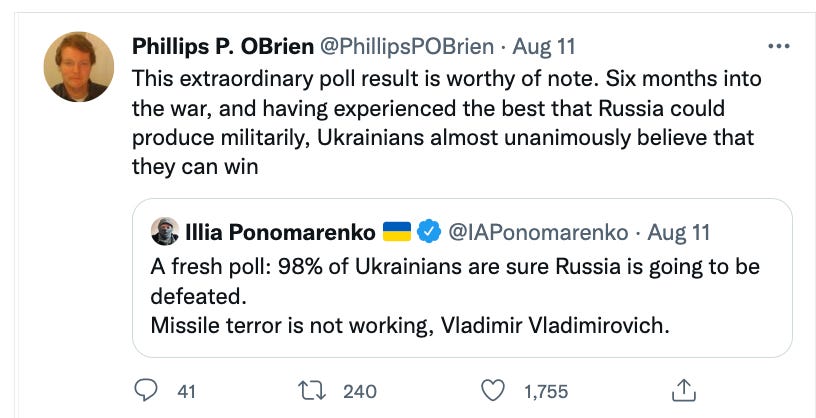
Anybody with basic knowledge on polling would tell you that a poll claiming ‘98%’ support is not ‘extraordinary’, it’s a joke bad enough that few apart from academics far from the front line would believe it.
You don’t get near 98% for ‘did NASA land on the moon’.
Many high status academics repeat comical propaganda from Azov — i.e the neo-Nazis.
If a professor of war widely quoted in the media can repeat such obvious nonsense, what other nonsense do they believe about the war?
Cf. Tyler Cowen below on IR academics getting Putin wrong.
UKR and industrial capacity
RUSI on artillery and Russia vs western manufacturing capabilities:
Russia has been firing 5-10,000 artillery shells per day.
‘In 2020, [US] artillery ammunition purchases decreased by 36% to $425 million. In 2022, the plan is to reduce expenditure on 155mm artillery rounds to $174 million. This is equivalent to 75,357 M795 basic ‘dumb’ rounds for regular artillery, 1,400 XM1113 rounds for the M777, and 1,046 XM1113 rounds for Extended Round Artillery Cannons. Finally, there are $75 million dedicated for Excalibur precision-guided munitions that costs $176K per round, thus totaling 426 rounds. In short, US annual artillery production would at best only last for 10 days to two weeks of combat in Ukraine. If the initial estimate of Russian shells fired is over by 50%, it would only extend the artillery supplied for three weeks.’
Europe similarly could only produce enough for a few weeks.
‘Anti-tank Javelins and air-defence Stingers are in the same boat. The US shipped 7,000 Javelin missiles to Ukraine – roughly one-third of its stockpile – with more shipments to come. Lockheed Martin produces about 2,100 missiles a year, though this number might ramp up to 4,000 in a few years. Ukraine claims to use 500 Javelin missiles every day.’ [So US entire stockpile ~20,000 would only provide 40 days of UKR claimed use.]
‘The Russians have fired between 1,100 and 2,100 missiles. The US currently purchases 110 PRISM, 500 JASSM and 60 Tomahawk cruise missiles annually, meaning that in three months of combat, Russia has burned through four times the US annual missile production.’
‘US reports on the defence industrial base have made it clear that ramping up production in war-time may be challenging, if not impossible, due to supply chain issues and a lack of trained personnel due to the degradation of the US manufacturing base.’
Overall ammunition consumption rates. ‘The US government has always lowballed this number. From the Vietnam era to today, small arms plants have shrunk from five to just one. This was glaring at the height of the Iraq war, when US started to run low on small arms ammunition, causing the US government to buy British and Israeli ammunition during the initial stage of the war. At one point, the US had to dip into Vietnam and even Second World War-era ammo stockpiles of .50 calibre ammunition to feed the war effort. This was largely the result of incorrect assumptions about how effective US troops would be. Indeed, the Government Accountability Office estimated that it took 250,000 rounds to kill one insurgent. Luckily for the US, its gun culture ensured that small arms ammunition industry has a civilian component in the US. This is not the case with other types of ammunition, as shown earlier with Javelin and Stinger missiles. Without access to government methodology, it is impossible to understand why US government estimates were off, but there is a risk that the same errors were made with other types of munitions.’
This is a reason I’ve been confused about the optimism of western experts — experts who have repeatedly been wrong on the war. If you think shortly Russian morale will collapse and the army mutiny, then I understand why you can ignore these numbers. But if you don’t, how does UKR not run out of artillery shells? Or are these numbers put out in UK and US think tanks all wrong?
Interesting perspective from Karaganov
1. We should have sorted UKR out in 2014 at latest, it was clear from 2008 that the west was going to use it to screw us. [NB. Contra western assumptions, this is the natural conclusion for Russians from what’s happening — not ‘we should never have touched UKR’.]
2. They, like PRC elites, see the West as crumbling, western elites as degenerate dangerous fools causing trouble with Russia and China to distract from their own failures. [There is obviously a lot of truth in this!]
3. American elites want to weaken China and weakening Russia is a crucial aspect of this. China realises this and is helping Russia. China is the obvious winner from 2022. [Yes, China is the obvious winner so far. Early on western media was full of drivel about how the west would force China to sanction Russia or we would sanction China. While no idiocy can be ruled out, with 2024 coming and Europe already heading for economic trauma I guess our Idiocracy will shrink from this.]
4. ‘Knowing the history of American nuclear strategy, I am 99% sure that if a nuclear strike is inflicted on one of the European countries supporting Ukraine, America will not use nuclear weapons. Another thing is that 1% still remains, and it means hundreds of thousands of victims on our part and a possible escalation to a general thermonuclear war. The psychological barrier that kept mankind from big wars will be broken. Therefore, we must do everything possible so that this does not come to this. But I do not rule out that the need to use nuclear weapons will appear. The current Western elite is inadequate. There are enough signs of this. What is the cost of waging war on the borders, in the zone of fundamental vital interests of a great nuclear power. In the last Cold War, this was unthinkable.’ [NB. I’m not sure how good the translation is which is obviously crucial when talking re nuclear use.]
5. ‘Ultimately, perhaps everything will turn out for the better, including for Russia, as the world will be reorganized.’ Provided Russia gets east and southern UKR (which ‘provided 75% of the country's GNP’) and we avoid nuclear war, he thinks the long-term trend is good as the west is diminished, China is rising, the rest of the world doesn’t want to be bossed about by America and Europe etc.
MISC
Interivew with Patrick Collison
Interview with Tyler Cowen
Interview with Charlie Songhurst, very successful investor:
M&A is pretty random compared to fields like product developement — crazy/random stuff, the odd comment, personal relations, much more important.
Pre-seed to seed failure? Team doesn’t come together.
Seed-series A failure? Failure to find product-market fit, highest time of pure chance/serendipity.
Series A failure? Can the manager scale? When there’s 10 people they’re managing you too. When you scale to 50, 90 people you need formal management. Wipes out loads of startups because of the massive collapse of productivity per person. From 10>100 people, great startup output per person maybe drops 10-15% but many drop 90% and do less with 100 than they did when they were 10! There’s little formal coaching, there’s huge room for improvement here.
Series B and beyond failure? Can you develop an institution with norms and culture? You need great legal and finance etc. A lot of it is quite boring. Can you imagine the CEO doing conference calls with Wall St?
When you hire senior people, VPs etc you can give them very complex jobs but those capable of this are also capable of politics! So scale means more politics. An important role of a founder is suppressing this.
Very rare to find people whose personality can cope great with the challenges at different levels. E.g people good at building institutions may hate pitching in the early stages.
How do founders cope with the first early bad hires, do they bin them fast?
People underestimate the importance of hiring, also because early hires then hire so they have huge leverage. Huge mistake is to rush early hires and leave duffers. [People, ideas, machines — in that order!]
Ben Reinhardt on Systems Research:
why it’s so hard — partly because of the inherently hard to predict behaviours of connecting different components, interfaces etc
why it’s so valuable — e.g internet, nuclear power, space rockets, UNIX, airplanes
Hofstadter's Law: “it always takes longer than you expect, even when you take into account Hoffstadter’s law.”
why it isn’t much funded — academia, companies incentives don’t match, particularly because e.g systems often need to take performance hits to get out of local optima (e.g early transistors were worse than contemporary vacuum tubes)
why Ben is working on a ‘private ARPA’ (PARPA) — if you’re one of the bilionaires who read this blog please consider helping him!
why ‘efficiency’ is often the enemy…
Rob Lee, one of the most interesting observers of the UKR war, on the tank:
The political decision to launch the war as they did, based on what we now know were huge intelligence failures (re likely collapse of key UKR institutions etc) and exacerbated by the connected failure to plan logistics, meant tanks were misused from the start.
‘Russia’s heavy tank losses can be explained by employment mistakes, poor planning and preparation, insufficient infantry support, and Ukrainian artillery. The use of Javelins and other light anti-tank systems in Ukraine has not demonstrated that the tank is obsolete any more than the Sagger anti-tank guided missile did in the 1973 Yom Kippur War, as discussed by David Johnson in these pages.’
Many lost Russian tanks have been abandoned not destroyed.
‘With sufficient infantry support and unmanned systems and ground reconnaissance to locate anti-tank teams, Russia’s tank fleet would have fared much better.’
Artillery has been more important than the missiles focused on by the media.
‘If anything, the early stages of the war simply confirm key components of U.S. military doctrine such as unity of command, mass, decentralized execution, combined arms, mission-type orders, and proper preparation.’
The Second Nagorno-Karabakh War between Armenia-Azerbaijan ‘did not demonstrate that tanks were obsolete. Instead, it demonstrated that Armenia’s air defenses were insufficient to defend its tanks and artillery from Azerbaijan’s airpower [including TB2 drones]’.
‘Although Russia has developed a variety of unmanned ground vehicles, they have only been used to clear mines far from the front lines in Ukraine, which demonstrates that they are not ready to replace tanks on the battlefield.’
This is not criticism of Lee but he does not discuss the future. I think it’s very likely that militaries will aim to have many, many more drones to swamp enemy air defences and destroy tanks. Neither Russia nor Ukraine represents what China is aiming for. When I talk to people who’ve been on the ground in Ukraine they agree that the UK should be putting far more effort and money into drones than we are and they fear other countries will move faster than us on this front…
Interview with GCHQ historian:
Despite making efforts to deal with historians, there was little take up. Few non-intelligence historians use intelligence reporting to illuminate their research, even though UK-intercepted diplomatic messages show not only what foreign diplomats were reporting to their Foreign Ministries, but also what the British Foreign Office was secretly aware of; and in some cases, the UK reports are all that has survived… As for ‘Intelligence Studies’, I didn’t really understand the subject, if the articles published in Intelligence and National Security were any sort of guide… GCHQ, at least, is an intensely pragmatic organisation, and I don’t think that establishing theoretical constructs around the way Sigint works connects in any realistic way to the way we work… I suspect that academic history has been very much siloed and political historians might feel that the time it would take to get to understand intelligence reporting contextually to support the work they are doing in other archives wouldn’t repay them sufficiently.
Interesting that there’s still work from WW2 classified:
All of the reporting from decrypted Imperial Japanese navy communications has been released, but there are some cryptographic studies that haven’t. That’s because they outline an approach to cryptanalysis which hasn’t yet been superseded. I can’t tell you how many times people have said to me ‘But everyone knows that Japanese Naval codes were broken’: they were, and it’s fair enough that the product of breaking them is releasable. But how it’s done is still sensitive.
Emerging market chaos coming?

Buterin, creator of ether, on Balaji’s new book re ‘network states’: the idea that internet communities will form online, using crypto, then acquire physical assets and political significance/power.
China elites: engineering and management skills
This explores the background of leading Chinese figures.
A core problem in the West is the combination of:
Massively high friction bureaucracies.
‘Vetocracy’ — many players can stop things and add friction, almost no players can force change, and those few players are inherently huge bottlenecks.
These ‘bottleneck players’ are very rarely people who have built or managed large complex organisations, so a) the ‘bottleneck players’ don’t have the skills to navigate the vetocracy and b) those with the skills are not bottleneck players, they are building Stripe or Apple or a hedge fund (and probably trying to isolate themselves and the networks they care about from politics).
China obviously has all sorts of problems but it also has builders, people who can actually build effective organisations and understand a lot about how the world really works, in key jobs.
Update on polygenic screening of embryos. Normie political world still strongly underappreciates what a big deal this is going to be, before we even get to CRISPR-editing etc.
Tyler Cowen is right that IR/political science specialists did badly predicting Putin/UKR.
You might argue that IR scholarship is not about prediction, just as some macroeconomic theories themselves imply that recessions cannot be generally predicted. Still, if IR scholars understand this region reasonably well, many more of them should have been raising red flags, no pun intended. There is no analog of the efficient markets hypothesis here, so IR work should not be so far from some degree of predictive accuracy. Not so many scholars (of various kinds) predicted the collapse of the USSR, and I think it is absolutely correct to conclude they did not understand the late 1980s USSR very well. The same can be said of the earlier Iranian revolution, which also was not widely predicted.
This book looks interesting on how prison gangs work.
Prison gangs can whack people in street gangs but not vice versa.
Extreme racial segregation & racial gangs make sense to limit the social complexity.
You don’t have any choice — you have to support your ethnic gang or you’re doomed quickly.
The true bosses at the apex of organised crime are mostly in supermax solitary, they can whack anybody but it’s incredibly hard to whack them, prison security works for them (in both senses)…
What’s the most compressed explanation of prison gangs? THEY’RE STABLE.

Another shocker on DoD procurement. In 2020 there was some hope that DoD might be changing. But everybody I speak to in the technology world, including in San Francisco in the past few weeks, says ‘same old shitshow, budgets prioritise the old primes, not new things, massive waste and fraud continue’.
According to the conventional wisdom, the pressure of UKR should have pushed these systems to improve. In UK and US they have not, they are trending worse and worse.
CHARTS/GRAPHS
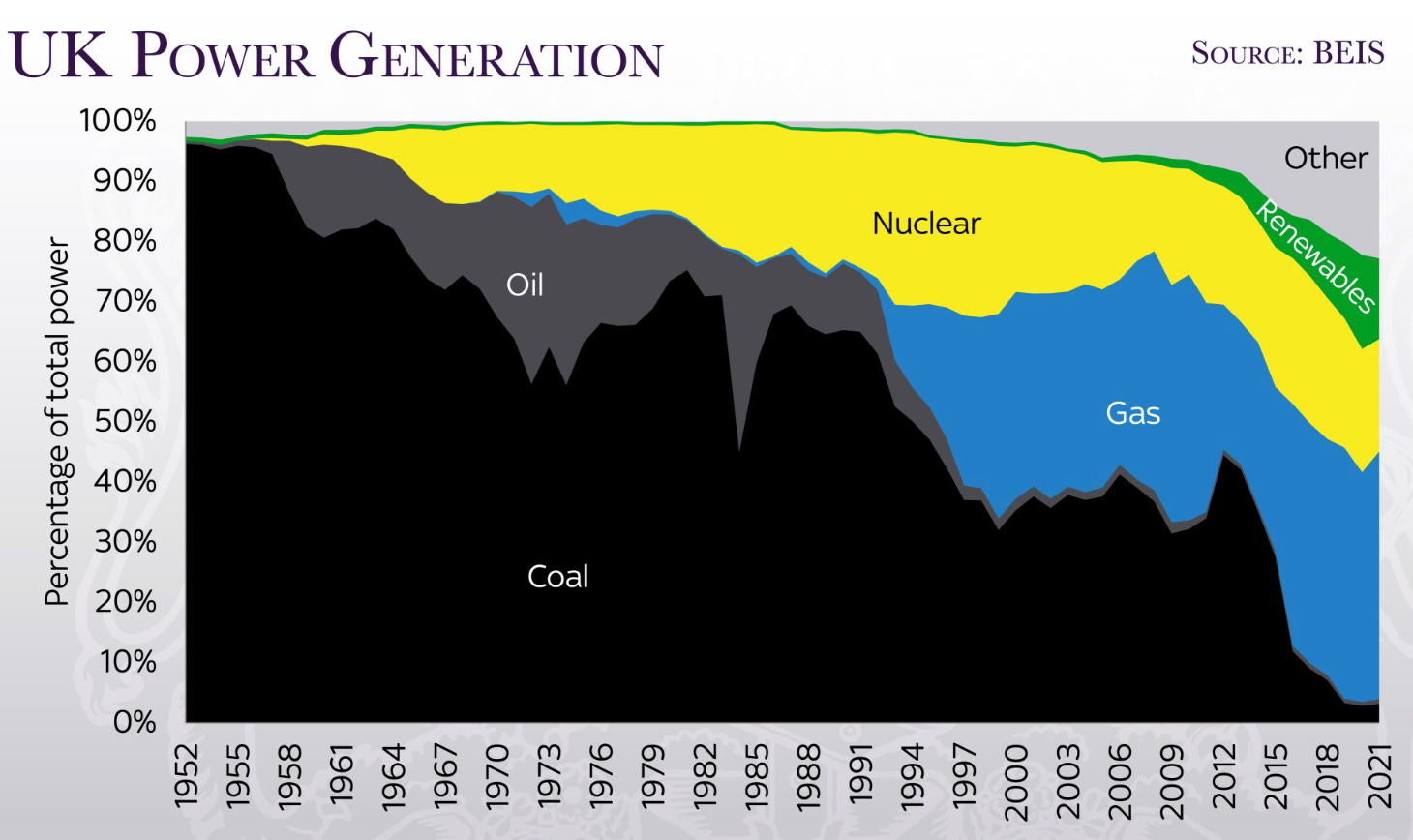
UK power generation
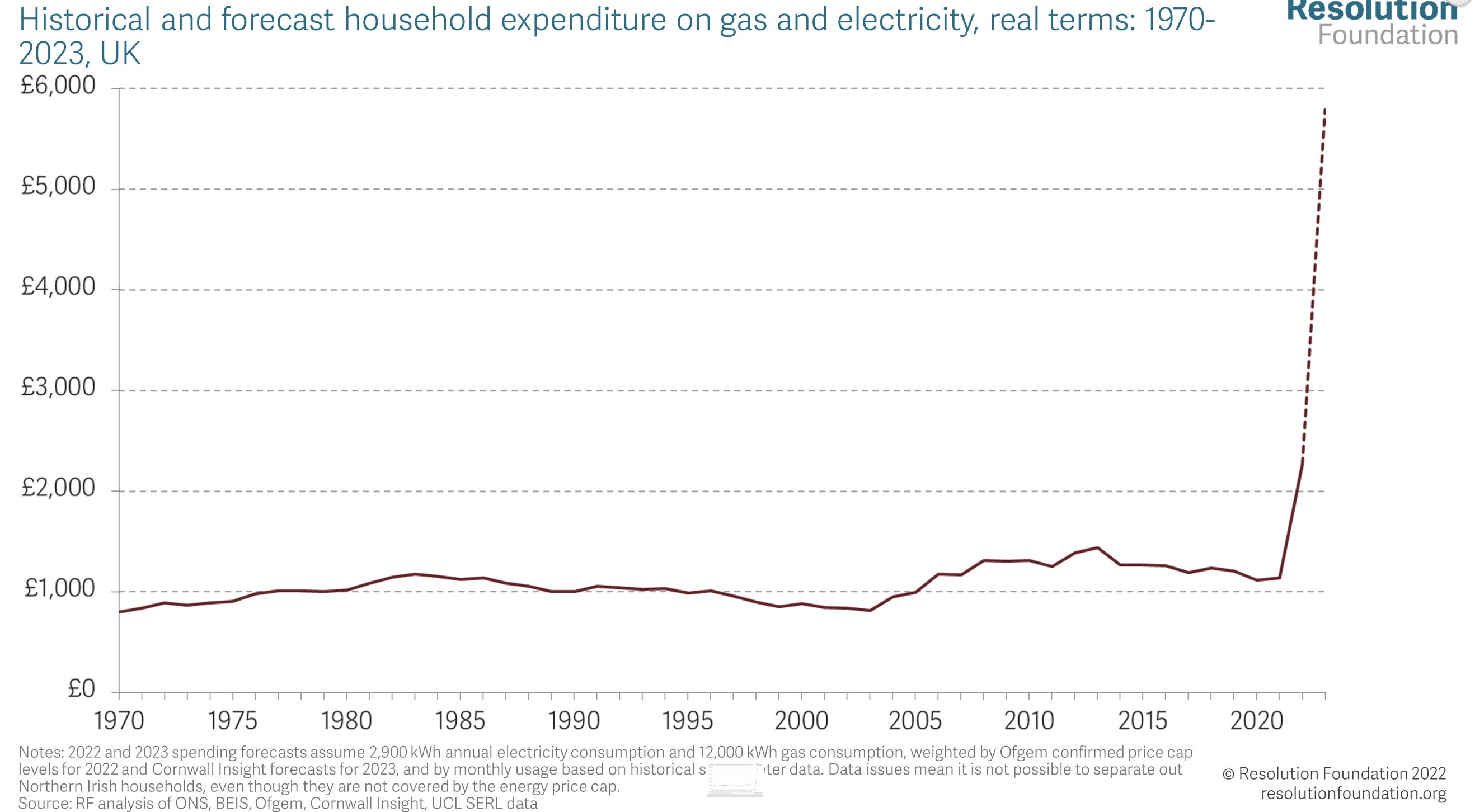
Unprecedented jump in UK household energy bills…
While disposable income shrinking
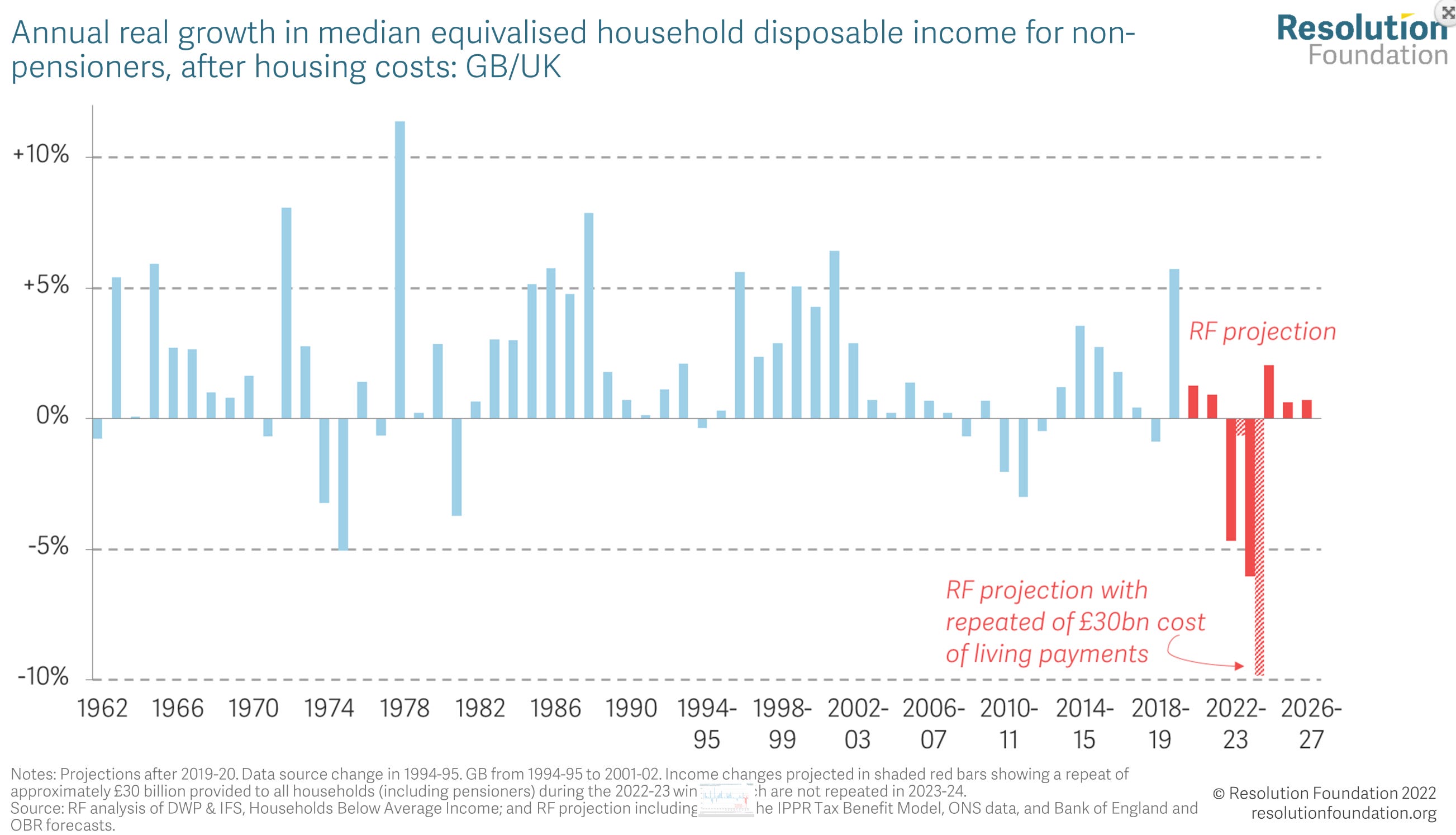
Historic downturn
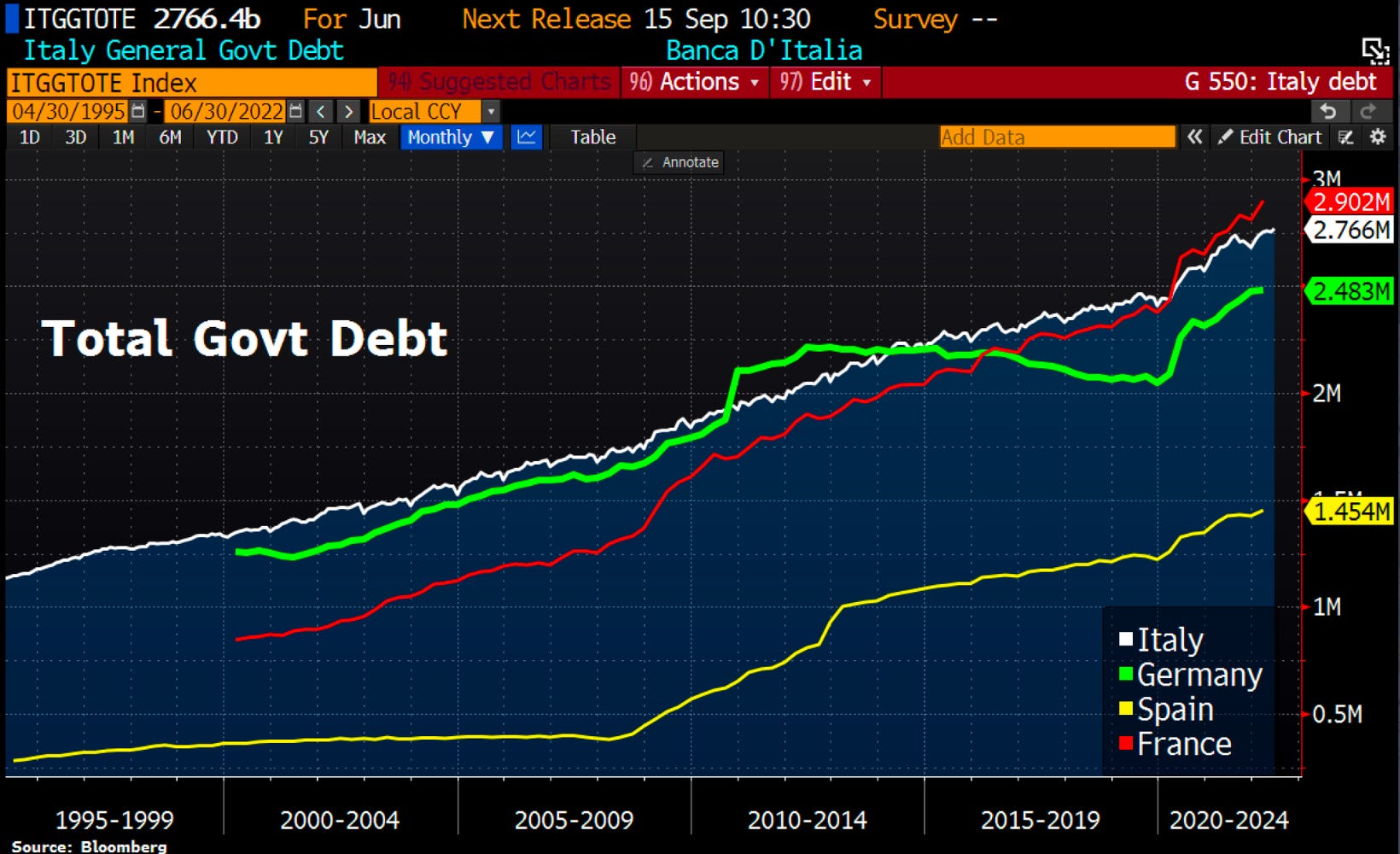
Eurozone debt
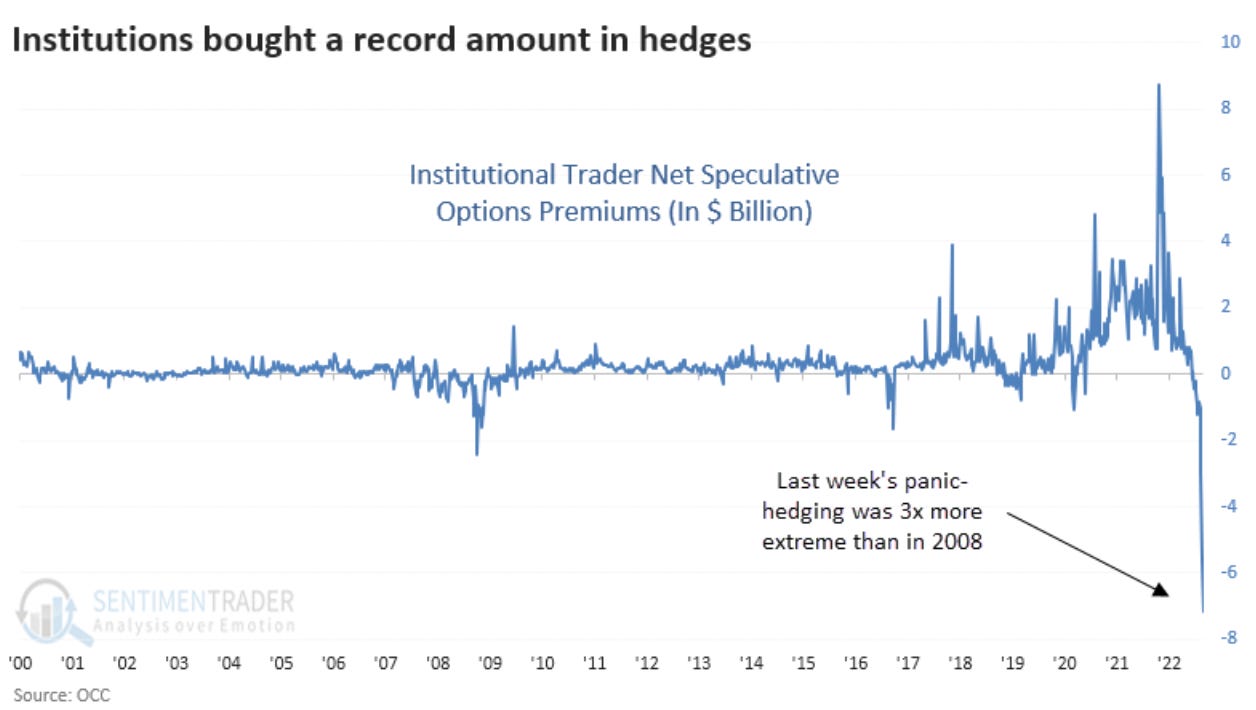
Institutional traders hedging bigtime — bought $8.1 billion worth of put options
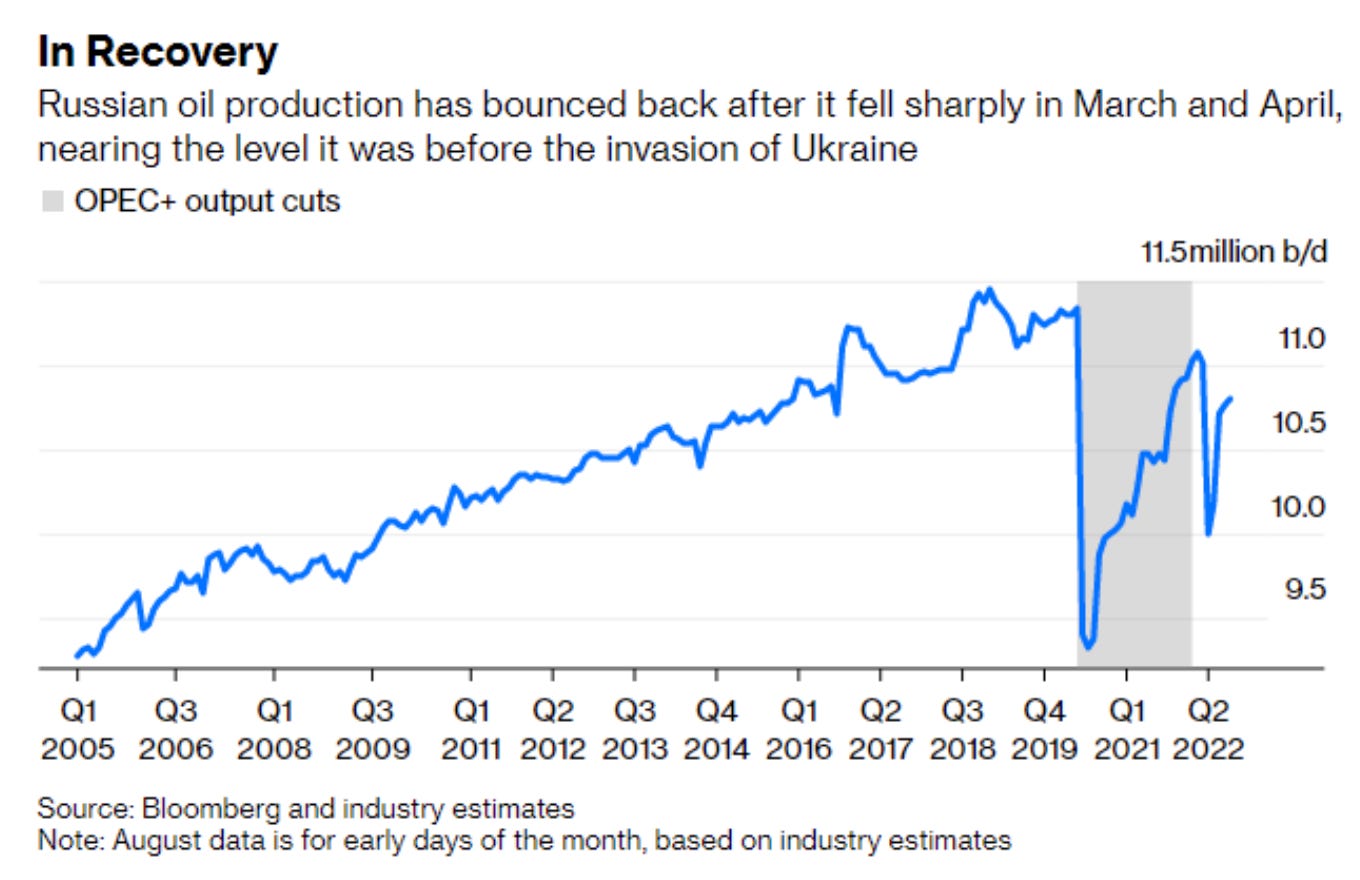
Production nearly back to pre-war levels and discounts Moscow had to offer Mar-April have narrowed a lot
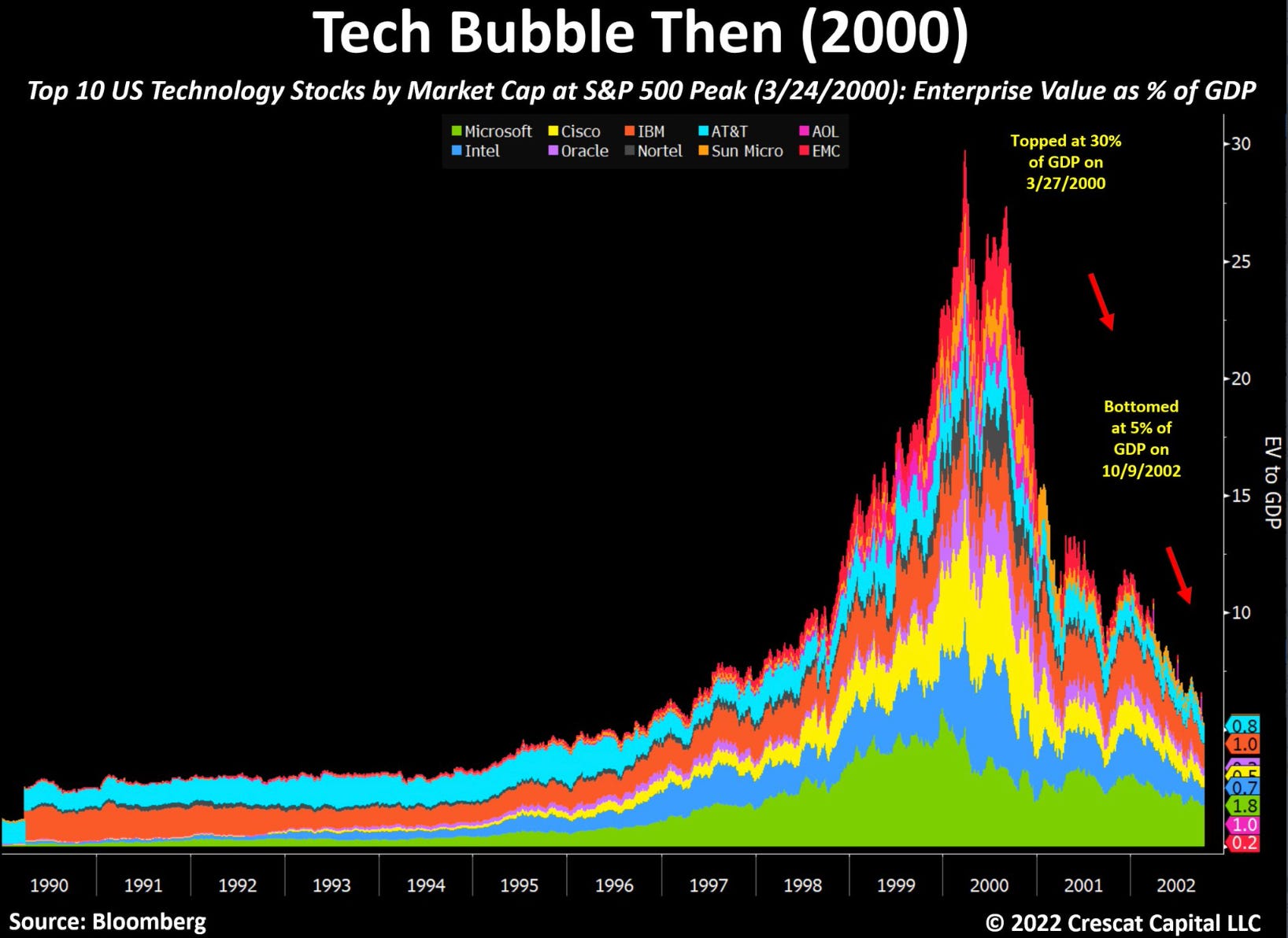
2000 bubble: top 10 companies valued at ~30% GDP
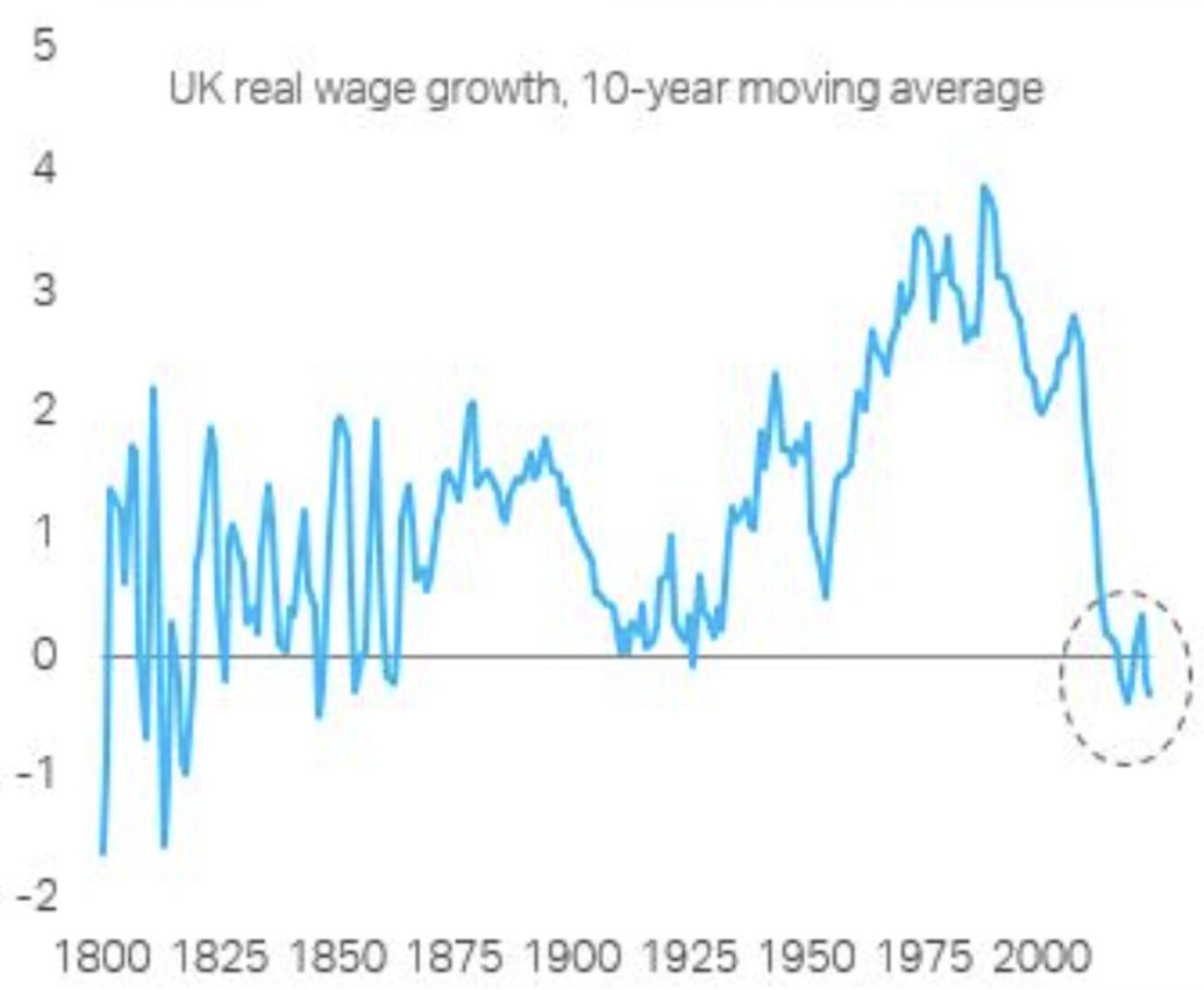
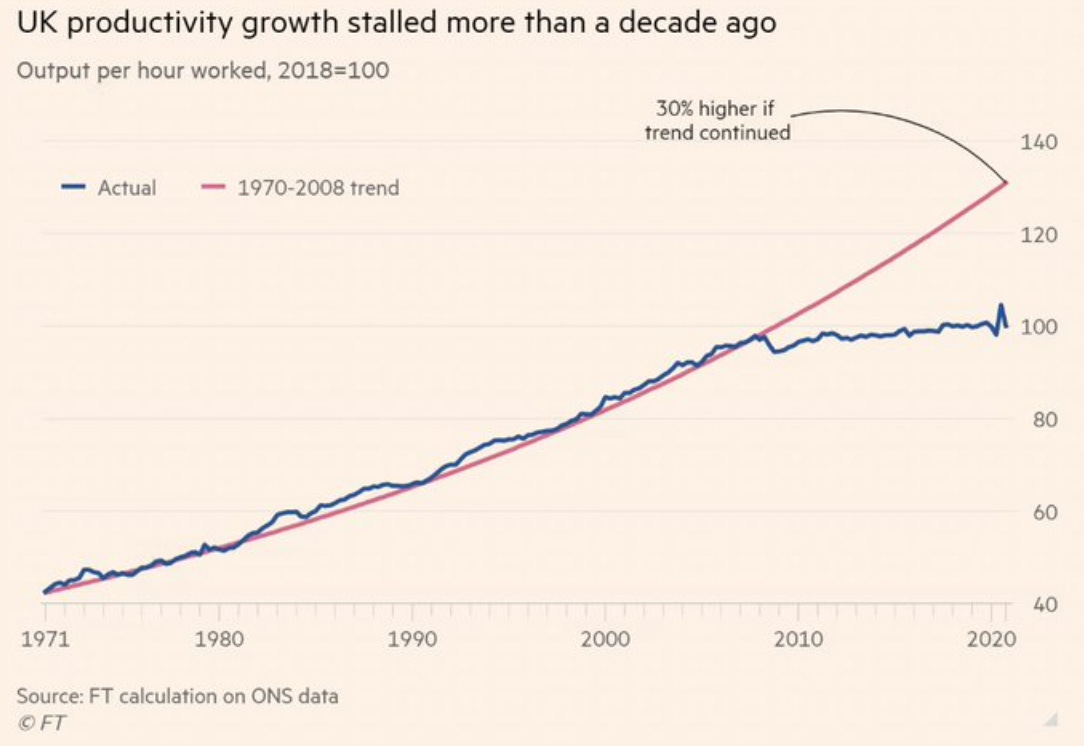
Update of one of the most important charts re UK economy, and the lack of discussion about it in SW1 2021-2 says so much
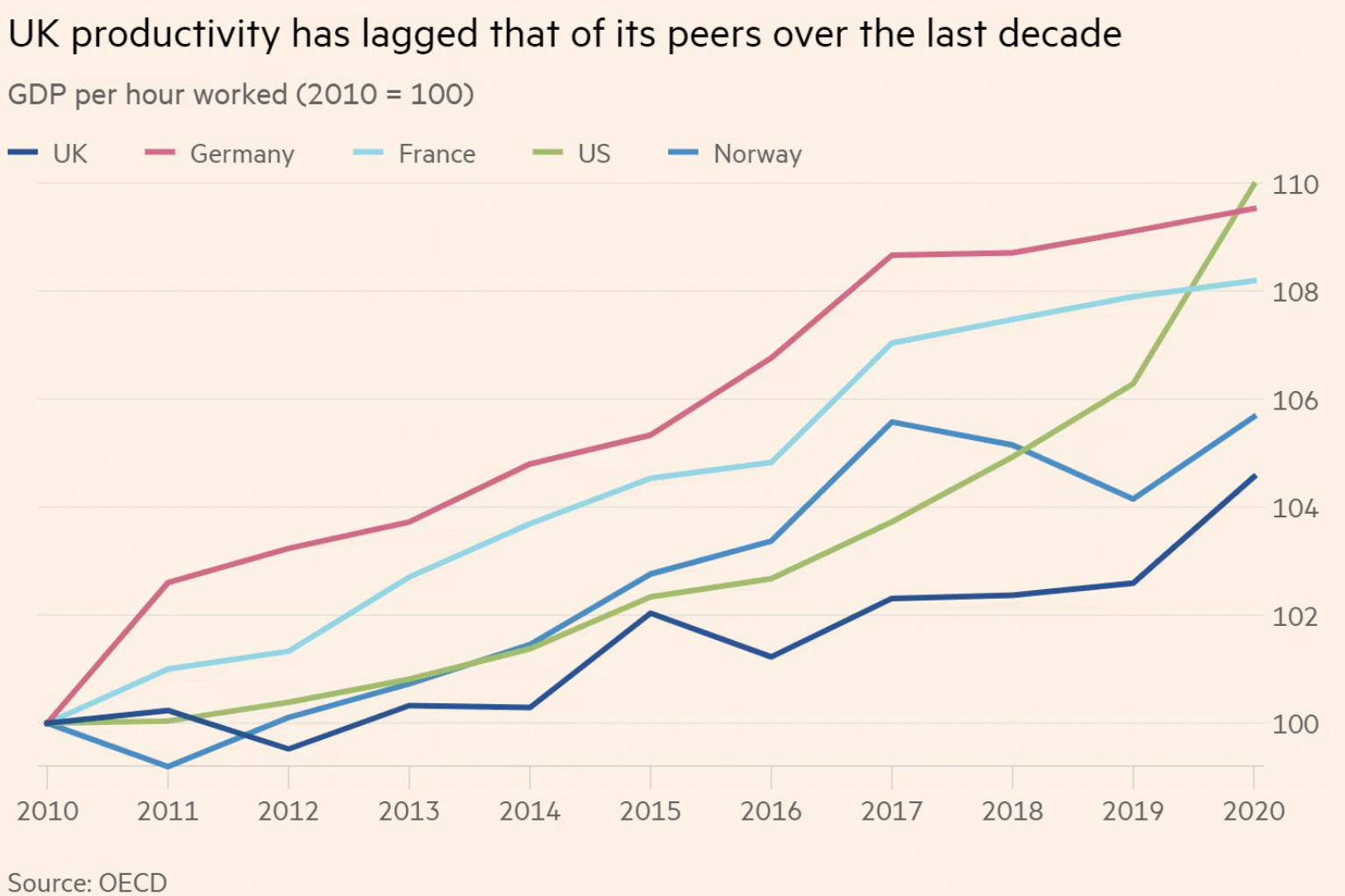
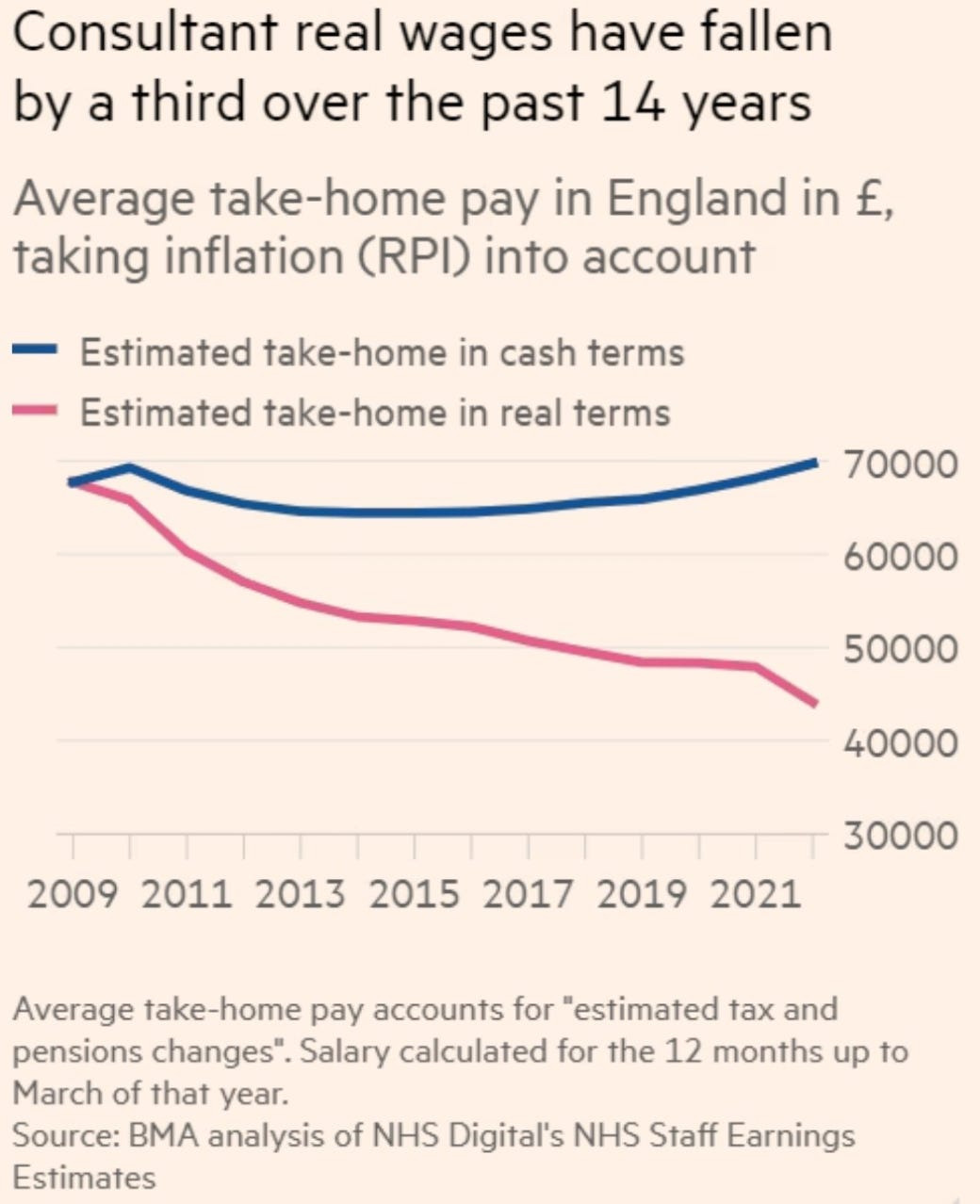
Consultant real wages
0.1% and 1% getting more of the pie (total pre-tax income, IFS)
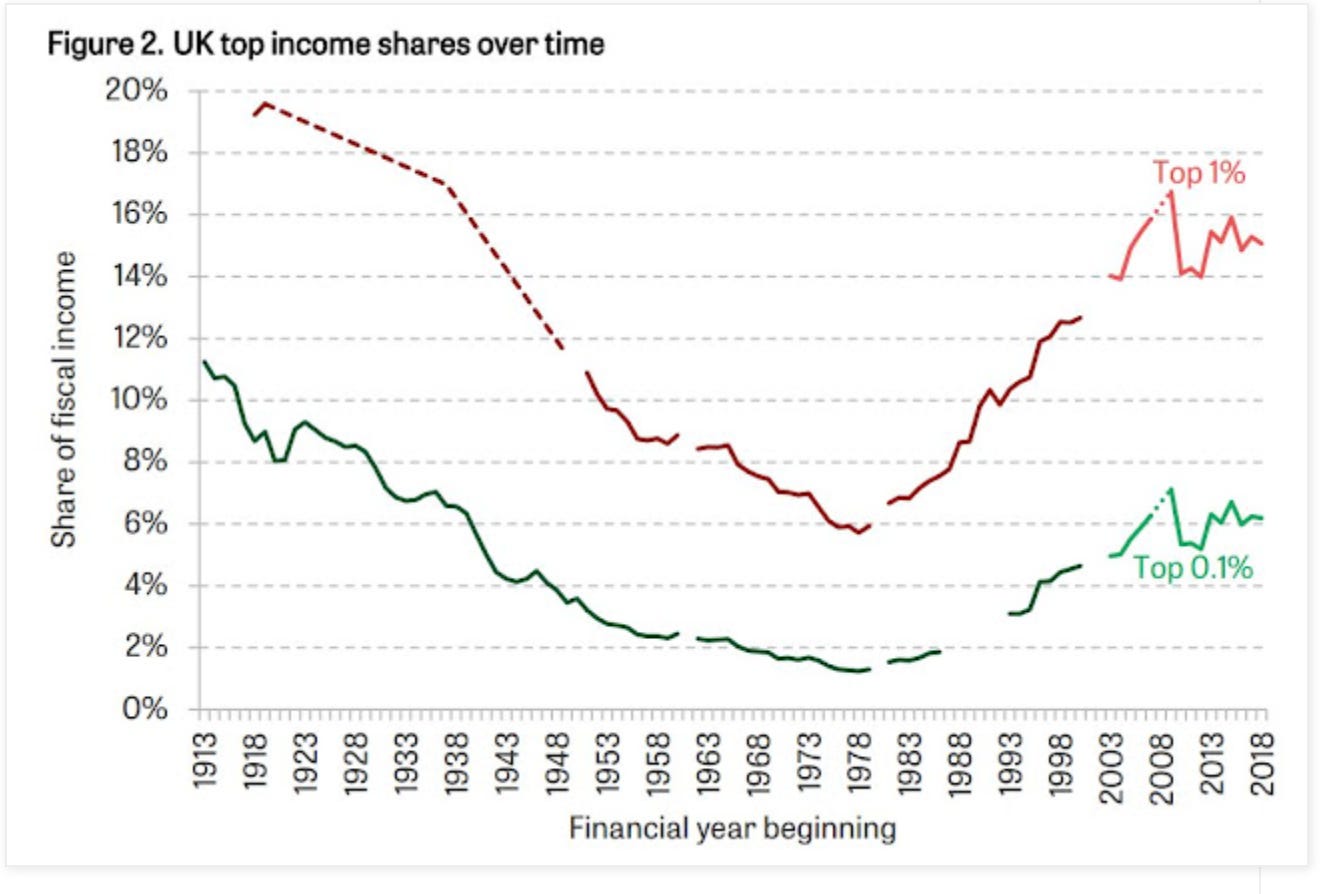
Instead, many of the top earners are working in highly profitable industries. 29% of wage earners within the top 1%, and 44% of those in the top 0.1%, work in financial services, compared with just 5% across the top half of the income distribution… This speaks to the increasingly well-documented international trend that increases in income inequality that have taken place since the 1980s have been primarily driven by increases in wage differences between firms rather than within them. That is, the top of the income distribution seems increasingly populated not by the most senior individuals from a wide range of firms, but by the employees of a narrower group of high-paying companies concentrated in, for example, the finance industry.
Please share
Consider a gift
Great to have you back Dom.
Bring on the start-up Dom. Quickly!